
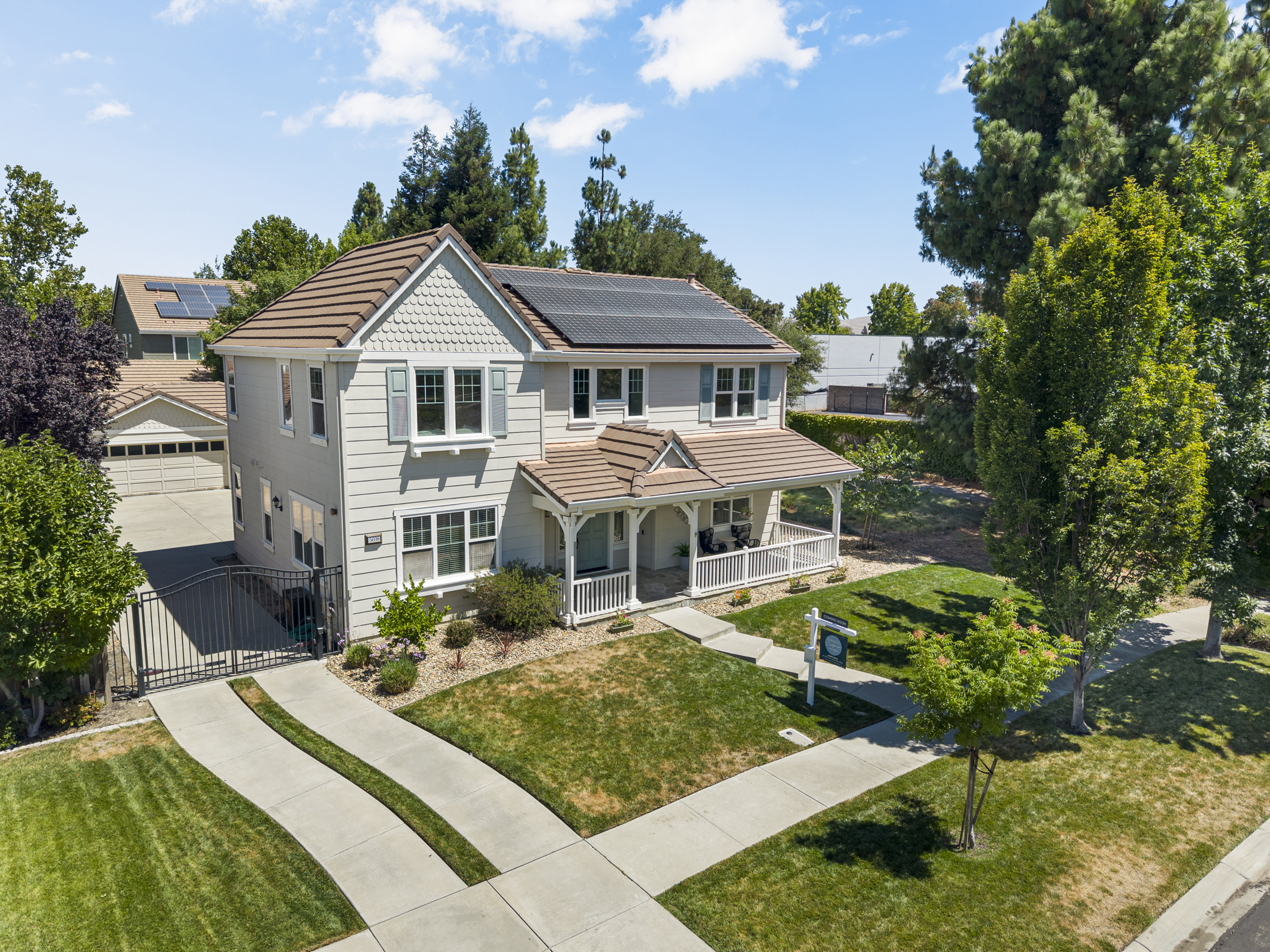
If you’ve been thinking about buying or selling a home in Livermore, Pleasanton, Dublin, San Ramon, or anywhere in the Tri-Valley, you’ve probably wondered: Are we in a buyer’s market or a seller’s market right now?
The short answer? It depends.
The Tri-Valley real estate market in 2026 looks very different from the fast-moving market we experienced a few years ago. Buyers have more homes to choose from and, in many situations, more room to negotiate. At the same time, I’m still seeing well-priced, move-in-ready homes attract attention, and some are still receiving multiple offers.
So I wouldn’t necessarily call this a buyer’s market or a seller’s market.
I’d call it a strategy market.
The advantage can shift from the buyer to the seller depending on the neighborhood, price point, condition of the home, competition, and most importantly, how the property is priced and positioned.
What’s Happening in the Livermore Housing Market?
Livermore is a great example of why it’s difficult to put one label on today’s market.
As of June 30, 2026, Zillow reported 222 homes for sale in Livermore, with homes going pending in a median of approximately 14 days. Of the sales measured through May, 52.7% sold above their asking price, while 35.3% sold below asking.
Think about that for a minute.
More than half of those homes sold over asking, while more than a third sold below asking.
That tells us something important: buyers are still willing to compete for the right home, but they aren’t willing to compete for every home.
Homes that are updated, show well, are located in desirable neighborhoods, and are priced correctly can still move very quickly.
Homes that are overpriced, need significant updating, or simply don’t show as well compared with the competition may sit longer. And once a home has been on the market for a while, buyers often have much more negotiating power.
One Number That Helps Determine Who Has the Advantage
One statistic we look at when determining whether a market favors buyers or sellers is months of inventory, sometimes called months’ supply.
In simple terms, months of inventory estimates how long it would take to sell all the homes currently on the market if no new homes were listed.
Generally speaking:
- Less than 4 months of inventory tends to favor sellers.
- 4–6 months of inventory is typically considered a more balanced market.
- More than 6 months of inventory tends to favor buyers.
But in the Tri-Valley, I don’t think months of inventory tells the entire story.
I also want to know: How quickly are homes going pending? Are sellers reducing their prices? How close are homes selling to their original list price? Which price ranges are getting the most activity? Are updated homes outperforming homes that need work?
And most importantly:
What’s happening in your specific neighborhood?
There Isn’t Just One Livermore Real Estate Market
This is one of the biggest things I want buyers and sellers to understand.
You can’t take one Livermore housing statistic and assume it applies to every home in the city.
A beautifully updated home in South Livermore, for example, may receive a very different response from buyers than another home at a similar price that needs substantial updating.
The same is true when you compare different neighborhoods, school attendance areas, lot sizes, property types, or price ranges.
Sometimes you can even see a noticeable difference from one street to another.
That’s why instead of simply asking:
“Is Livermore a buyer’s market or a seller’s market?”
I think the better question is:
“What is the market doing for the type of home I’m buying or selling?”
That’s where the information becomes much more useful.
What Does Today’s Market Mean for Tri-Valley Buyers?
If you’re looking to buy a home in Livermore, Pleasanton, Dublin, San Ramon, or the surrounding Tri-Valley, there are definitely opportunities right now.
Compared with the extremely competitive markets we’ve experienced in the past, buyers may have more chances to negotiate on certain properties.
Depending on the home, you may be able to negotiate the purchase price, request repairs or credits, ask for seller concessions, or simply have a little more time to make a decision.
But there’s an important distinction:
More negotiating power does not mean every seller is ready to negotiate.
The homes that check the most boxes — great location, desirable floor plan, updated condition, good schools, attractive yard and competitive pricing — can still move quickly.
If you find one of those homes, approaching it as though you’re in a strong buyer’s market could cost you the property.
On the other hand, if a home has been sitting for several weeks, has had a price reduction, or needs work, that can create a completely different opportunity.
Knowing the difference is where having a good strategy really matters.
What Does Today’s Market Mean for Tri-Valley Sellers?
For sellers, I think one of the biggest changes in this market is that pricing correctly from the beginning matters more than ever.
Buyers have choices.
Before they ever walk through your front door, they’ve probably already looked at the photos, studied the comparable homes online, checked how long your home has been listed, and compared it with everything else in their price range.
That means the old strategy of “let’s start high and see what happens” can be risky.
You don’t necessarily need to be the cheapest home on the market, and you certainly don’t need to give your home away.
But you do need to give buyers a reason to choose your home over the competition.
That comes down to preparation, presentation, pricing and marketing.
When those pieces come together, sellers can still see excellent results in this market.
When they don’t, buyers are much more willing to move on to the next house.
Livermore vs. Pleasanton vs. Dublin vs. San Ramon
Another reason I’m hesitant to label the entire Tri-Valley as either a buyer’s or seller’s market is because each city — and even each neighborhood — behaves differently.
Livermore, Pleasanton, Dublin and San Ramon have different average price points, housing styles, lot sizes, school considerations, commute patterns and buyer pools.
Then, within each city, the market can change again depending on the neighborhood and price range.
A $1.2 million home may be experiencing completely different market conditions from a $2 million home just a few miles away.
This is why national housing headlines only tell us so much.
Real estate has always been local, but right now it’s incredibly hyperlocal.
So, Who Has the Upper Hand Right Now?
The answer really comes down to the individual property.
Buyers may have the upper hand when a home is overpriced, needs updating, has been sitting on the market, has already had a price reduction, or isn’t attracting much competition.
Sellers may have the upper hand when their home is in a desirable location, shows beautifully, is priced correctly, and has multiple interested buyers.
And sometimes the market is balanced enough that both sides can walk away feeling like they got a good deal.
That’s actually one of the things I like about this market.
There can be opportunities for buyers without sellers necessarily having to sacrifice a strong sales price.
The key is understanding the situation before deciding how aggressively to price, negotiate, or write an offer.
Frequently Asked Questions About the Livermore & Tri-Valley Housing Market
Is Livermore a buyer’s market right now?
I would describe Livermore as a more balanced and selective market than we’ve seen in recent years. Buyers have more choices and can have negotiating power on certain homes, but desirable homes that are priced correctly can still attract significant competition.
Are Livermore home prices dropping?
Livermore home values have softened compared with the previous year. Zillow reported the typical Livermore home value at approximately $1.11 million as of June 2026, down 5.1% year over year.
That said, I wouldn’t assume every Livermore homeowner has lost 5% of their home’s value. Real estate values can vary considerably depending on the neighborhood, property type, condition, lot, upgrades and price range.
Are Livermore homes still selling over asking price?
Yes. Zillow reported that 52.7% of Livermore sales measured in May 2026 sold above list price, while 35.3% sold below asking.
Again, this is why I think the current market is so property-specific.
Is now a good time to buy a home in Livermore?
For the right buyer, it can be.
More inventory and less competition on certain properties can create opportunities that were much harder to find a few years ago.
Whether now is the right time for you depends on your budget, financing, timeline, desired neighborhood and how long you plan to own the home.
Is now a good time to sell a home in Livermore?
There are still plenty of motivated buyers looking for homes throughout Livermore and the Tri-Valley.
The difference is that today’s buyers are more selective.
If you’re selling, having the right pricing and marketing strategy — along with preparing the home properly before it hits the market — can make a significant difference in your final result.
The Bottom Line
So, are we in a buyer’s market or a seller’s market in the Tri-Valley?
I don’t think there’s one answer.
Some homes are absolutely giving buyers more negotiating power. Other homes are still creating competition and putting sellers firmly in control.
The market isn’t rewarding buyers or sellers across the board. It’s rewarding good strategy.
If you’re considering buying a home in Livermore or the Tri-Valley, you want to know where there may be room to negotiate and where you’ll need to be more competitive.
And if you’re thinking about selling your Livermore or Tri-Valley home, you want to understand how homes like yours are actually performing — not just what you’re hearing in national housing headlines.
Curious what the market looks like for your home or the neighborhood you’re considering?
Let’s take a look at the most recent comparable sales, what’s currently sitting on the market, what’s going pending, and where buyers are competing. That will tell you far more about your position in today’s market than any headline ever could.